Description
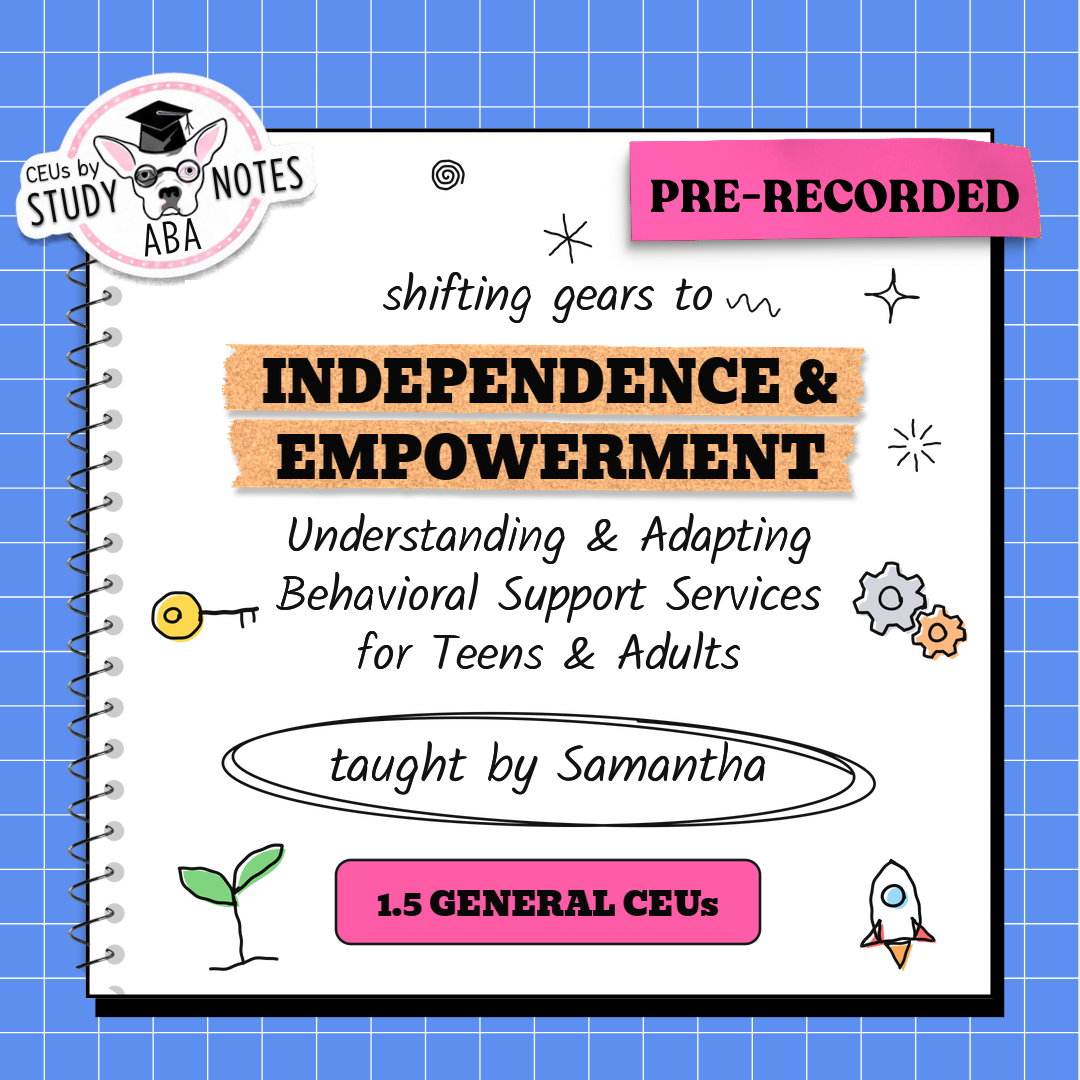
** This course will provide the participant with 1.5 General Learning Type BACB® CEU**
Description of Learning Type CE Event: Just like learning to drive, supporting young adults to find their way in the world is simultaneously exhilarating and terrifying. Without an instructor who is patient, supportive, and who lets them figure things out, many neurodivergent people will fall by the wayside and never develop the skills to create a meaningful life. Through an updated behavior analytic model, we can provide support to these young people in ways that fit how they learn, how they engage with the world, and how they organize their lives. This talk will break down the challenges we find in the crossroads of life between adolescence and adulthood, and present a new way to expand your clinical knowledge and confidence while still providing high-quality behavioral services to an expanded range of clients.
About the Instructor: Sam (she/her) is the owner and chief clinical officer of Iris Behavioral Health in Albuquerque, New Mexico. Sam provides adaptive behavior therapy and group support for late-diagnosed, high-masking, and self-identified neurodivergent adults and teens, using both her 10+ years of clinical experience and her lived experience as someone who needed that type of support. Sam is focused on organizing people and environments to support a high quality of life for all.
Target Audience: BCBAs, BCaBAs, or other professionals who are looking to expand their practice to work with teens and young adults in transitional phases of life.
Learning Objectives for Participants: As a result of this course participants will be able to …
- Understand intersectionality of disability, culture, and identity as they relate to supporting a variety of neurodivergent individuals through behavior analysis
- Consider effective, identity affirming methods of behavioral assessment for use with older clients
- Use a constructional approach with individuals to create their own behavioral goals and increase buy-in from clients and support people
- Identify effective and forward-thinking methods of reporting and documenting progress and challenges
- Talk about barriers to supporting high-masking neurodivergent folks and those with hidden disabilities
- Learn, generalize & maintain adult-focused skills in natural contexts